Description
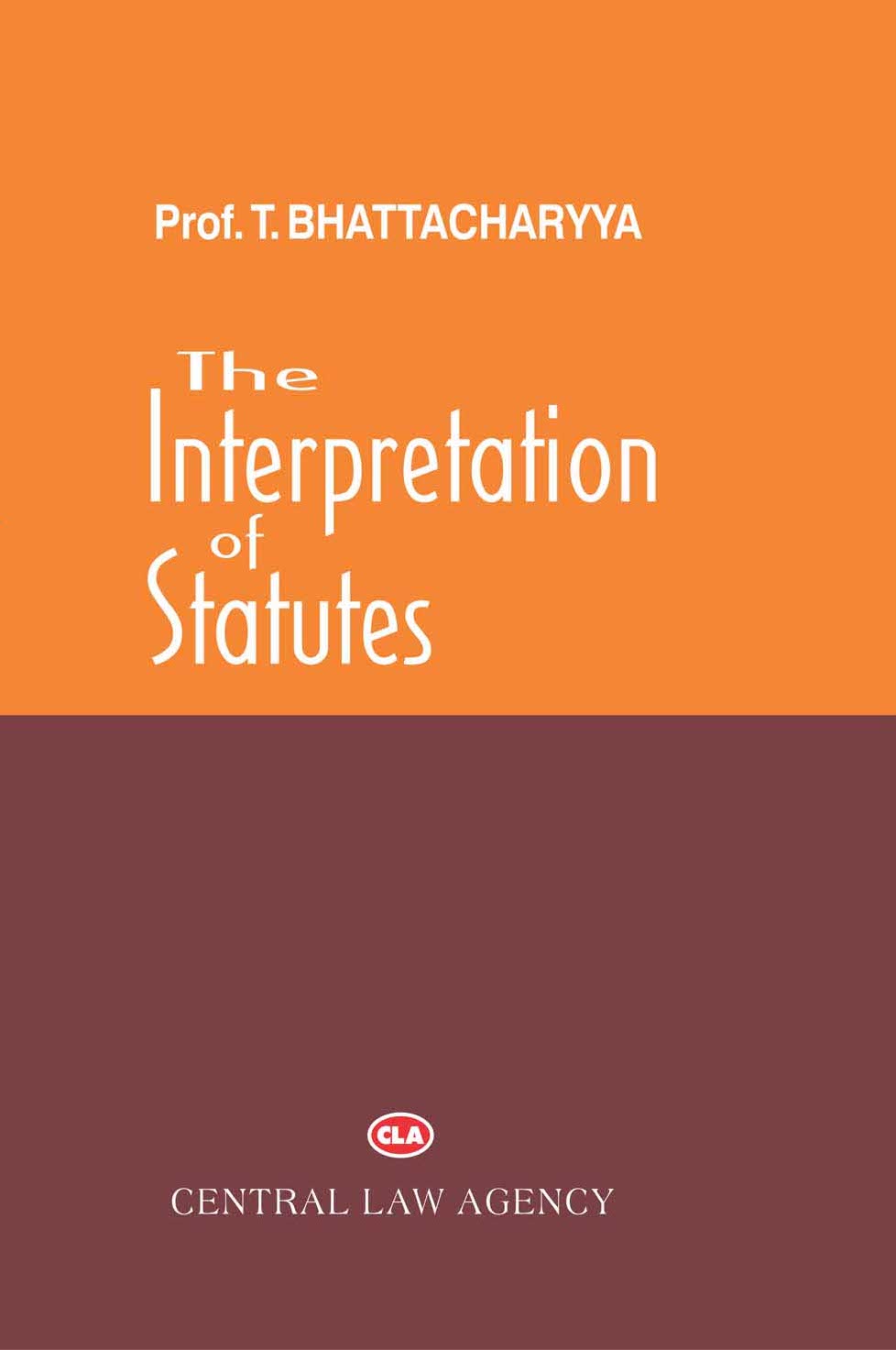
Prof. T. Bhattacharyya’s Interpretation of Statutes, now in its 11th Edition, is a comprehensive and authoritative guide to the principles and techniques of statutory interpretation. The book explores how courts interpret and apply laws in light of the social, political, and economic objectives that legislation seeks to achieve. With law constantly evolving, the judiciary’s task of declaring and upholding the intent of the legislature has become both complex and dynamic—making this subject one of the most fascinating areas of legal study.
Designed for students, teachers, legal practitioners, judges, and law drafters, the book provides a clear and systematic analysis of the doctrines, rules, and canons of interpretation, supported by landmark judicial pronouncements of the Supreme Court and High Courts of India, as well as notable foreign judgments. Prof. Bhattacharyya rejects the idea of treating constitutional interpretation as a separate branch, emphasizing instead that the same fundamental principles of interpretation apply to all laws.
This updated edition preserves the book’s scholarly yet accessible style, making it ideal for both academic and professional reference. It also includes the General Clauses Act, 1897 as an appendix and a comprehensive Table of Cases for ready reference. Recently, the scope of industrial property has been expanded to include among others the protection of geographical indication of goods, plant varieties, and the lay-out designs of integrated circuits, as well as repression of unfair competition, including the protection of trade secrets.
\"प्रो. टी. भट्टाचार्य की \'इंटरप्रिटेशन ऑफ स्टेट्यूट्स\' (Interpretation of Statutes) का 11वां संस्करण कानूनी व्याख्या के सिद्धांतों और तकनीकों पर एक प्रामाणिक मार्गदर्शिका है। यह पुस्तक इस बात की पड़ताल करती है कि न्यायालय सामाजिक, राजनीतिक और आर्थिक उद्देश्यों के आलोक में कानूनों की व्याख्या और अनुप्रयोग कैसे करते हैं।
व्याख्या के प्रमुख सिद्धांत (Principles of Interpretation)
न्यायपालिका का कार्य विधायिका के वास्तविक आशय (Legislative Intent) को स्पष्ट करना है। इसके लिए पुस्तक में व्याख्या के विभिन्न नियमों का विस्तार से विश्लेषण किया गया है:
शाब्दिक व्याख्या का नियम (Literal Rule): कानून के शब्दों को उनके साधारण और व्याकरणिक अर्थ में समझना।
स्वर्णिम नियम (Golden Rule): यदि शाब्दिक अर्थ से कोई विसंगति या अन्याय होता है, तो शब्दों के अर्थ को संशोधित किया जा सकता है।
मिसचिफ नियम (Mischief Rule/Heydon\'s Case): यह देखना कि कानून बनने से पहले क्या कमी थी और उस कमी को दूर करने के लिए कानून का क्या उद्देश्य है।
सामंजस्यपूर्ण व्याख्या (Harmonious Construction): जब दो कानूनों या धाराओं में टकराव हो, तो उनकी व्याख्या इस तरह करना कि दोनों का अस्तित्व बना रहे।
विशेषताएं और अद्यतन (Key Features):
संवैधानिक और वैधानिक व्याख्या: प्रो. भट्टाचार्य इस विचार को खारिज करते हैं कि संवैधानिक व्याख्या एक अलग शाखा है; उनके अनुसार व्याख्या के मौलिक सिद्धांत सभी कानूनों पर समान रूप से लागू होते हैं।
न्यायिक संदर्भ: इसमें भारत के सर्वोच्च न्यायालय, उच्च न्यायालयों के ऐतिहासिक निर्णयों के साथ-साथ महत्वपूर्ण विदेशी निर्णयों का भी समावेश है।
बौद्धिक संपदा का विस्तार: नवीनतम संस्करण में औद्योगिक संपदा के बढ़ते दायरे को शामिल किया गया है, जैसे माल का भौगोलिक उपदर्शन (GI), पौधों की किस्में, एकीकृत सर्किट के ले-आउट डिजाइन और व्यापार रहस्यों का संरक्षण।
अतिरिक्त संसाधन: पुस्तक में साधारण खंड अधिनियम, 1897 (General Clauses Act, 1897) को परिशिष्ट के रूप में दिया गया है, जो शब्दों की कानूनी परिभाषा समझने के लिए अनिवार्य है।
यह पुस्तक न केवल कानून के छात्रों और शिक्षकों के लिए, बल्कि न्यायाधीशों, अधिवक्ताओं और कानून का मसौदा तैयार करने वालों (Law Drafters) के लिए भी एक अनिवार्य संदर्भ ग्रंथ है।\"




Reviews
There are no reviews yet.